
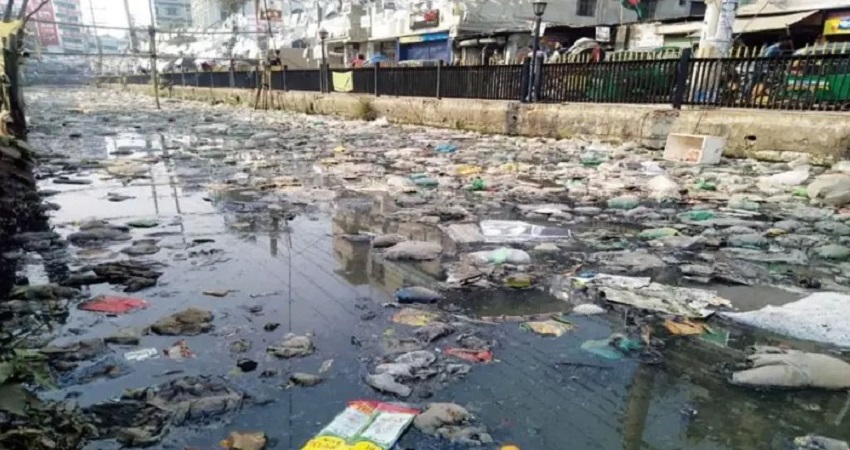
The Dhaka North City Corporation (DNCC) has undertaken an ambitious project to restore 220 kilometers of canals in the capital by the end of 2025. According to DNCC Administrator Mohammad Azaz, the initiative aims to restore the natural water flow in the city’s canals to combat the chronic problem of waterlogging during the monsoon season.
Speaking to the media, Mohammad Azaz confirmed that 108 kilometers of canal excavation and cleaning work have already been completed. The remaining 112 kilometers are expected to be restored within this year. This milestone, he said, is a major step toward ensuring sustainable drainage and flood prevention across key parts of Dhaka.
Citing cadastral survey records, the DNCC administrator said Dhaka once had a total of 340 kilometers of natural canals. However, due to unplanned development, illegal encroachment, and road or walkway construction over these waterways, around 120 kilometers of canals have vanished. Many of the remaining canals are in a highly degraded state.
“In just the past three months, we’ve managed to restore water flow in 108 kilometers of canals,” Azaz said. Of this, nearly 40 kilometers fall under the jurisdiction of the Dhaka South City Corporation (DSCC), with the rest managed by DNCC.
In Mohammadpur’s Haiker Canal area, multi-storey buildings and various unauthorized establishments have already been demolished to reclaim canal land. Similar eviction operations will soon take place in Rupnagar Canal, Paris Canal, Ibrahimpur Canal, Kalshi Canal, and the historic canal adjacent to ECB Square.
“The era of illegal occupation of canals is over,” Azaz emphasized. “No matter how large the illegal structure is, it will be removed entirely.”
There are 17 locations across the capital where rainwater remains stagnant for over two days, according to DNCC reports. Among these, ten key zones are expected to see major improvements within this year, while minor issues may persist in seven to eight areas.
As part of its long-term plan, DNCC is constructing Reinforced Cement Concrete (RCC) walls along both banks of the restored canals. This will ensure uninterrupted water flow and strengthen the canal system against future encroachment and environmental degradation.
Azaz proudly stated that the restoration of 108 kilometers of canal cost less than BDT 5 crore (approx. USD 450,000). “If this had been done by others, the budget would have been several times higher. We’ve shown that with honest intent and efficient planning, impactful work can be done at a fraction of the usual cost,” he added.
To further protect the canals from encroachment and waste dumping, DNCC has planned extensive tree plantations on both sides of the restored canals. This eco-friendly initiative, supported by the Forest Department, is set to begin on June 1, 2025.
About 30 volunteer organizations, local residents, and environmental advocacy groups are actively participating in the project. DNCC is offering food and logistical support to these volunteers to ensure sustained community involvement in canal protection.
Although the current caretaker government faces time and financial limitations in executing major infrastructure projects, the DNCC administrator hopes that future governments will continue this effort. He emphasized the need for a permanent and sustainable canal management plan, including the construction of retaining walls, dedicated pedestrian walkways, and essential civic facilities along canal banks to prevent future encroachments.
Dhaka’s canal restoration project marks a significant move toward building a more flood-resilient and environmentally sustainable capital. By reviving lost waterways, removing illegal structures, and mobilizing community support, the DNCC is paving the way for a cleaner, safer urban environment for future generations.